


The best time of year to paint a house exterior in Seattle is July through September, the months with the fewest rainy days and nights that stay above 50°F on average, according to NOAA's 1991 to 2020 climate normals for Sea-Tac. Late May and June can work as well, but at the edges of the season the forecast matters more than the calendar.
At Paintzone, we offer exterior painting in Seattle for homes and businesses, and interior work can take the wetter months while an exterior waits for a dry forecast.
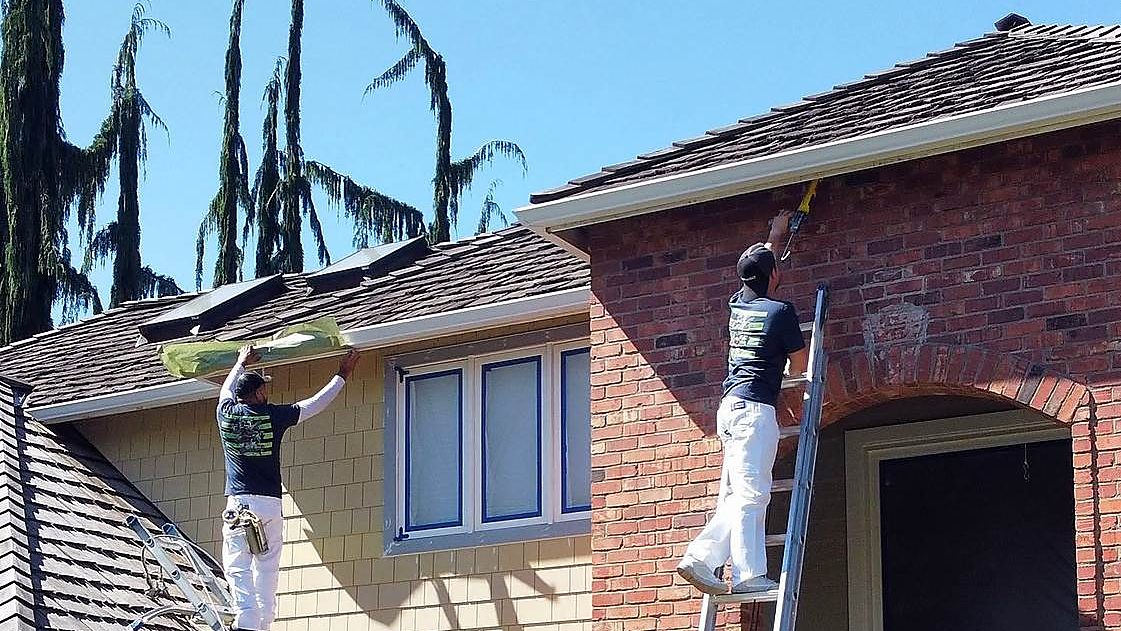
Which months make the best window for exterior painting in Seattle?
The best months are the ones with the fewest rainy days and the mildest nights, and NOAA's normals for Sea-Tac show a clear dry window from July through September. These are the average days with measurable rain and the average overnight lows for the main painting season:
- May: 11 rainy days, lows near 49°F
- June: 9 rainy days, lows near 53°F
- July: 5 rainy days, lows near 57°F
- August: 5 rainy days, lows near 57°F
- September: 8 rainy days, lows near 54°F
- October: 14 rainy days, lows near 47°F
July and August are the driest stretch, and the Western Regional Climate Center notes that two to four weeks can pass then with only a few showers. September is easy to overlook, yet on these averages it has fewer rainy days than June and similar nights. October brings more than twice September's rainfall and the start of the wet season, so jobs that run late into the fall depend on a run of dry days.
How do rain, temperature and dew point limit exterior painting?
Exterior paint needs a dry surface and enough warmth to form its film, and in Seattle moisture limits the work more often than cold does. Sherwin-Williams explains that colder temperatures and moisture on the surface keep a paint film from forming properly, and it asks for conditions to stay in range and above the dew point for at least 48 hours after application. The dew point is the temperature at which moisture in the air condenses on surfaces as dew.
Benjamin Moore describes the industry standard as painting only when the surface is more than 5°F above the dew point. Cold matters too, but less often here. Sherwin-Williams rates some exterior lines, such as Duration, for application down to 35°F, and on NOAA's averages Sea-Tac's nights stay above 35°F in every month, so rain and dew usually set the limit before the thermometer does.
Rain needs a margin on both sides. Sherwin-Williams says most products need at least 4 hours of dry time before moisture settles on them, and after a heavy rain it advises waiting at least a day, since a wet substrate is likely to cause peeling later.
Why does the time of day matter when painting a house exterior?
Even in a dry month, the hours of the day change what paint can do, because dew forms as soon as the sun sets and settles into paint that has not cured, as Sherwin-Williams notes. In late summer and early fall, the Western Regional Climate Center adds, lower valleys are sometimes filled with fog or low clouds until noon.
That is why exterior work usually starts once the morning dew has dried and stops early enough for the paint to set before evening, and Sherwin-Williams adds that the cooler the day, the sooner painting should stop. Strong sun brings the opposite problem, since painting a wall that sits in direct sunlight and is too warm can cause heat blistering.
What happens if exterior paint is applied in the wrong weather?
Paint applied in poor conditions may look fine at first and fail later, which is why the weather on the day decides how long the job lasts. Sherwin-Williams lists the risks of cold and moisture as a shorter paint life, surfactant leaching, mildew, frosting and adhesion problems.
Surfactant leaching shows up as tan, brown or clear spots that can look glossy, soapy or sticky, when ingredients rise to the surface of paint that is curing slowly. Sherwin-Williams advises rinsing it off with clean water right away, before it hardens. Rain or dew that reaches latex paint shortly after it dries can cause blisters, and Benjamin Moore notes that paint rained on before it has thoroughly dried may form bubbles.
Can a Seattle house exterior be painted in the fall or in winter?
A fall or winter exterior is possible on a dry stretch, but the margin shrinks each month after September. Sea-Tac's share of possible sunshine falls from 62 percent in September to 43 percent in October, according to the Western Regional Climate Center, and the rainy days pile up through winter.
Sherwin-Williams warns that late-season paint can stop coalescing, or melting together into one film, when the temperature drops, and that a common mistake is painting on days above 50°F before nights that fall below 35°F. In the wet months, interior painting and small exterior repairs make better use of the calendar, and the main exterior can be planned for the next dry season.
How should exterior prep and painting be planned around the weather?
Planning around the weather starts with the prep, because washing, scraping and repairs need dry wood before any primer goes on. Siding that has just been washed or rained on needs time to dry before primer, paint or a cedar siding stain goes on.
Choosing the paint is part of the plan too. Products rated for lower temperatures widen the window a little, while the prep and products behind exterior paint that lasts in Seattle weather matter as much as the date. Choosing colors for Pacific Northwest light before the season starts keeps the dry weeks for painting.

Seattle exterior painting questions homeowners ask before booking
How long after painting can it rain on a freshly painted exterior?
Sherwin-Williams says most exterior products need at least 4 hours of dry time before moisture settles on them, so the forecast for the rest of the day matters as much as the morning.
Is a Seattle summer ever too hot for exterior painting?
Seattle's July and August highs average about 77°F, well below the 100°F where Sherwin-Williams' heat caution starts, but a wall in direct, hot sun can still blister fresh paint.
Sources
- NOAA NCEI, U.S. Climate Normals 1991 to 2020, monthly, Seattle-Tacoma International Airport
- Western Regional Climate Center, mean percent of possible sunshine
- Western Regional Climate Center, Climate of Washington
- Sherwin-Williams, exterior product application FAQs
- Sherwin-Williams, surfactant leaching
- Sherwin-Williams, blistering
- Sherwin-Williams, late-season painting
- Benjamin Moore, temperature and exterior painting
We may use AI tools to help draft and edit our articles, and we check every fact before we publish. If something looks wrong, please write to us at contact@paintzonellc.com.