


An accent wall gives a living room a place for the eye to land, so it works best on a wall that already has a reason to be noticed, such as a fireplace, built-in shelves or art, painted in a color that relates to the other walls. The light in the room, the sheen and the finish decide the rest.
At Paintzone, we offer interior painting in Seattle, from a single accent wall in paint to mineral finishes such as limewash and Roman clay.
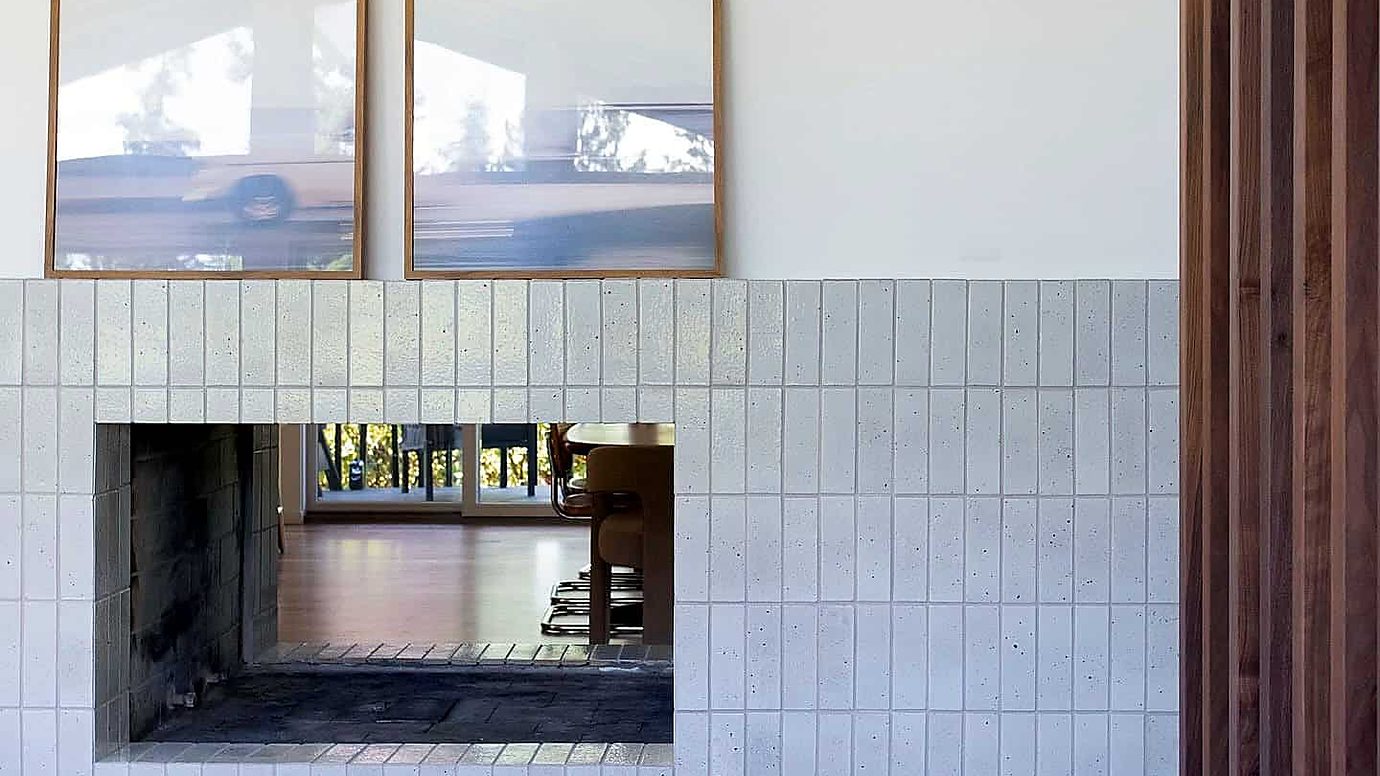
Which wall should be the accent wall, and which should stay plain?
The best accent wall is the one the room already looks toward: a wall with a fireplace, built-in shelves, art or a detail such as wainscoting, as Benjamin Moore describes it. Sherwin-Williams adds that the wall facing the main entrance is often the most appropriate one, since it is the first view of the room.
The walls to leave plain are the ones you would rather hide and the ones that would compete with another focal point. In a long, narrow living room, a slightly darker color on the two shorter walls makes the room look wider, according to Sherwin-Williams.
When no wall has a focal point or a distinctive shape, Sherwin-Williams advises against an accent wall altogether, and painting every wall may suit the room better.
How should the accent color relate to the other living room walls?
An accent color looks intentional when it belongs to the same palette as the other walls, a few shades lighter or darker, which is the contrast Benjamin Moore recommends. Light, soft walls take a deep accent, while midtone or deep walls take a lighter one.
The room's fabrics and wood help with the choice. Benjamin Moore suggests tying the accent to the upholstery or rug and painting the other walls a lighter version of it, or a neutral with a matching undertone. Sherwin-Williams points to wood floors and cabinets, whose undertone the paint color should work with.
These are accent colors the paint makers themselves show or suggest for living rooms:
- Benjamin Moore Shadow 2117-30, LRV 9, a deep purple shown on a living room wall and mantel
- Benjamin Moore First Light 2102-70, LRV 76, a soft pink shown as the accent in a white living room
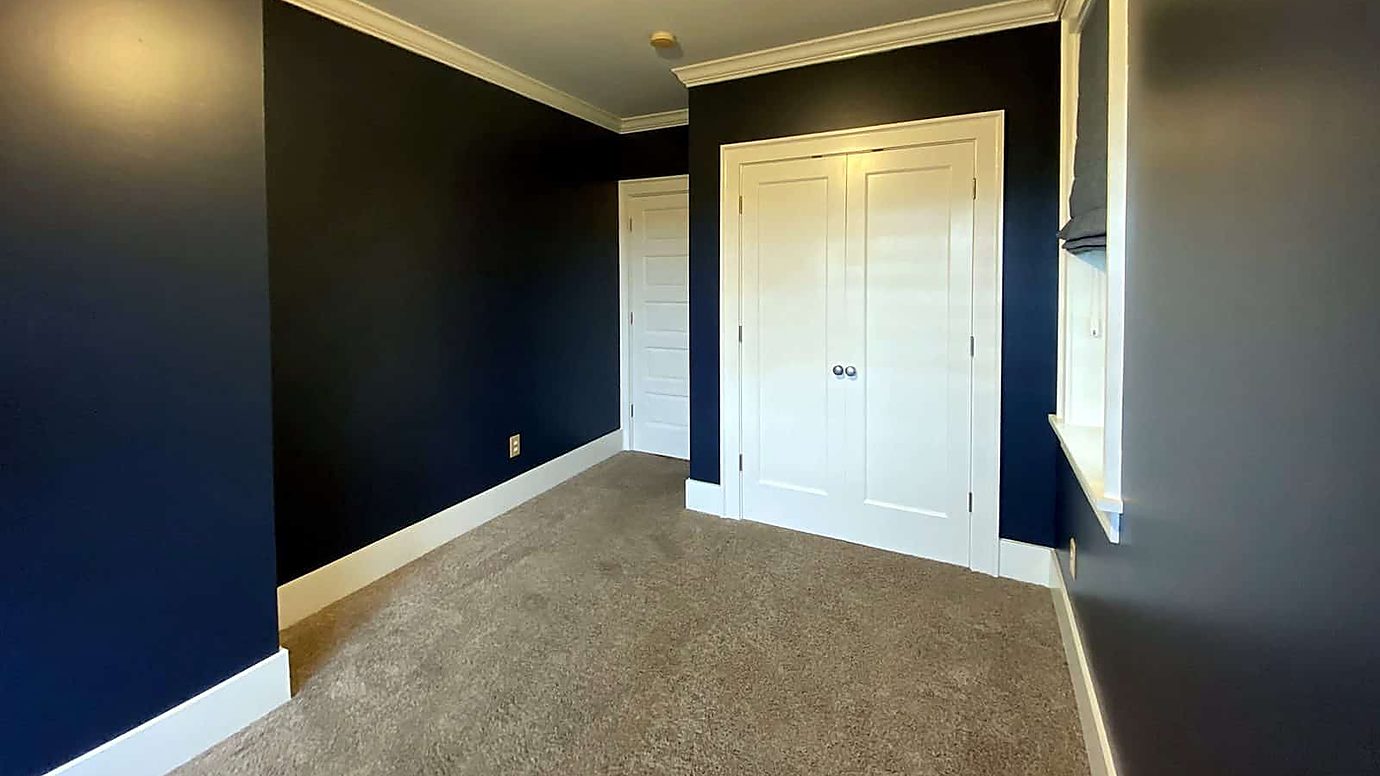
- Benjamin Moore Hale Navy HC-154, LRV 8, a deep navy from its dark colors for accent walls
- Benjamin Moore Black Beauty 2128-10, LRV 5, a soft black for a black accent wall
- Sherwin-Williams Urbane Bronze SW 7048, LRV 8, a warm bronze shown on a living room feature wall
- Sherwin-Williams Salty Dog SW 9177, LRV 5, a deep navy suggested for a pop of color in a living room
Which accent wall colors suit a small or dimly lit living room?
In a small or dim living room, a cooler or lighter accent tends to open the space, while a warm, dark accent can make the wall feel closer, according to Benjamin Moore. LRV, the light reflectance value, measures how much light a color reflects, from near 0 for black to near 100 for white.
The direction of the light matters as much as the size of the room. Sherwin-Williams describes north light as soft, diffused and naturally cool and recommends warm colors with a higher LRV for north-facing rooms, while Benjamin Moore notes that a room flooded with sun can carry more saturated color.
Dark accents need light around them, and Sherwin-Williams recommends a matte black accent wall for rooms with plenty of natural light. Since a color looks different at different times of day, a large sample on the chosen wall, checked in the morning and in the evening, shows how it will read.
What paint sheen works best for an accent wall in a living room?
For most living room walls, eggshell or satin balances looks and practicality, according to Sherwin-Williams, while flat paint is prone to scuffs and stains. Sheen also changes how a color reads, since higher-gloss paints enrich and brighten it, and Benjamin Moore suggests matte to ease reflections in a room with strong natural light.
For a deep color with a soft, velvety look, such as matte black, Sherwin-Williams recommends a flat finish, which suits a wall that is seen more than touched. A guide to choosing a paint finish compares the sheens room by room.
Which textured finishes and paneling suit a living room accent wall?
A mineral finish gives an accent wall texture as well as color. Limewash is brushed on by hand for a soft, cloudy matte finish, Roman clay is troweled on as a thin plaster that feels velvety, and tadelakt is a lime plaster burnished and sealed with soap into a water-repellent surface.
Paneling and wall details are the other route, and Benjamin Moore lists wainscoting among the features worth highlighting. Art, shelves and wall coverings can carry an accent wall as well, as long as nothing else in the room competes with it, and the same ideas work in other rooms, such as a nursery accent wall.

When does color on every wall work better than a single accent wall?
Painting the whole room works better when no single wall deserves the attention, or when the goal is a room that feels larger. Benjamin Moore notes that a monochromatic scheme can make a room look bigger. Sherwin-Williams suggests painting walls, trim and doors in one color to visually lengthen a room with lower ceilings.
A painted ceiling is another option, and Sherwin-Williams finds it more eye-catching than an accent wall because it is unexpected. In an open plan, where the living room flows into the kitchen or dining area, Sherwin-Williams recommends neutrals or colors from one family so the spaces read as one.
Living room accent wall questions homeowners ask before painting
Should an accent wall be lighter or darker than the other walls?
An accent wall can be lighter or darker, as long as it differs from the other walls by a few shades, which is the contrast Benjamin Moore recommends: a deep accent with light walls, or a lighter accent with midtone or deep walls.
How much paint does a single accent wall need?
The wall's area, the coverage of the paint and the number of coats set the amount, and how much a gallon of paint covers shows how to work it out.
Sources
- Benjamin Moore, accent wall ideas and inspiration
- Benjamin Moore, living room ideas and inspiration
- Benjamin Moore, dark paint colors
- Benjamin Moore, monochromatic color schemes
- Sherwin-Williams, accent walls
- Sherwin-Williams, why should one paint an accent wall
- Sherwin-Williams, how to choose colors
- Sherwin-Williams, color by room orientation
- Sherwin-Williams, color based on light direction
- Sherwin-Williams, paint sheen guide
- Sherwin-Williams, how light and finish affect paint color
- Sherwin-Williams, how to paint a matte black accent wall
- Sherwin-Williams, how to paint with dark colors
- Sherwin-Williams, the fifth wall
- Sherwin-Williams, painting walls, doors and trim the same color
- Sherwin-Williams, color flow in an open floor plan
- Sherwin-Williams, blue paint colors
We may use AI tools to help draft and edit our articles, and we check every fact before we publish. If something looks wrong, please write to us at contact@paintzonellc.com.